
What actually drives the price of an asphalt driveway on the Central Coast? Size, base condition, access, slope, and edge work. After 25 years putting driveways down between Gosford and Lake Munmorah, I’ll walk you through every factor that moves the number, so you can read a quote properly and spot the corners being cut.
I’ve been quoting driveways on the Coast for over 25 years now, and the question I get most weeks is the same one: "Glenn, what’s a fair price?" There’s no single number. There’s a list of things that change the number, and that’s what this guide is about.
What You’re Actually Paying For
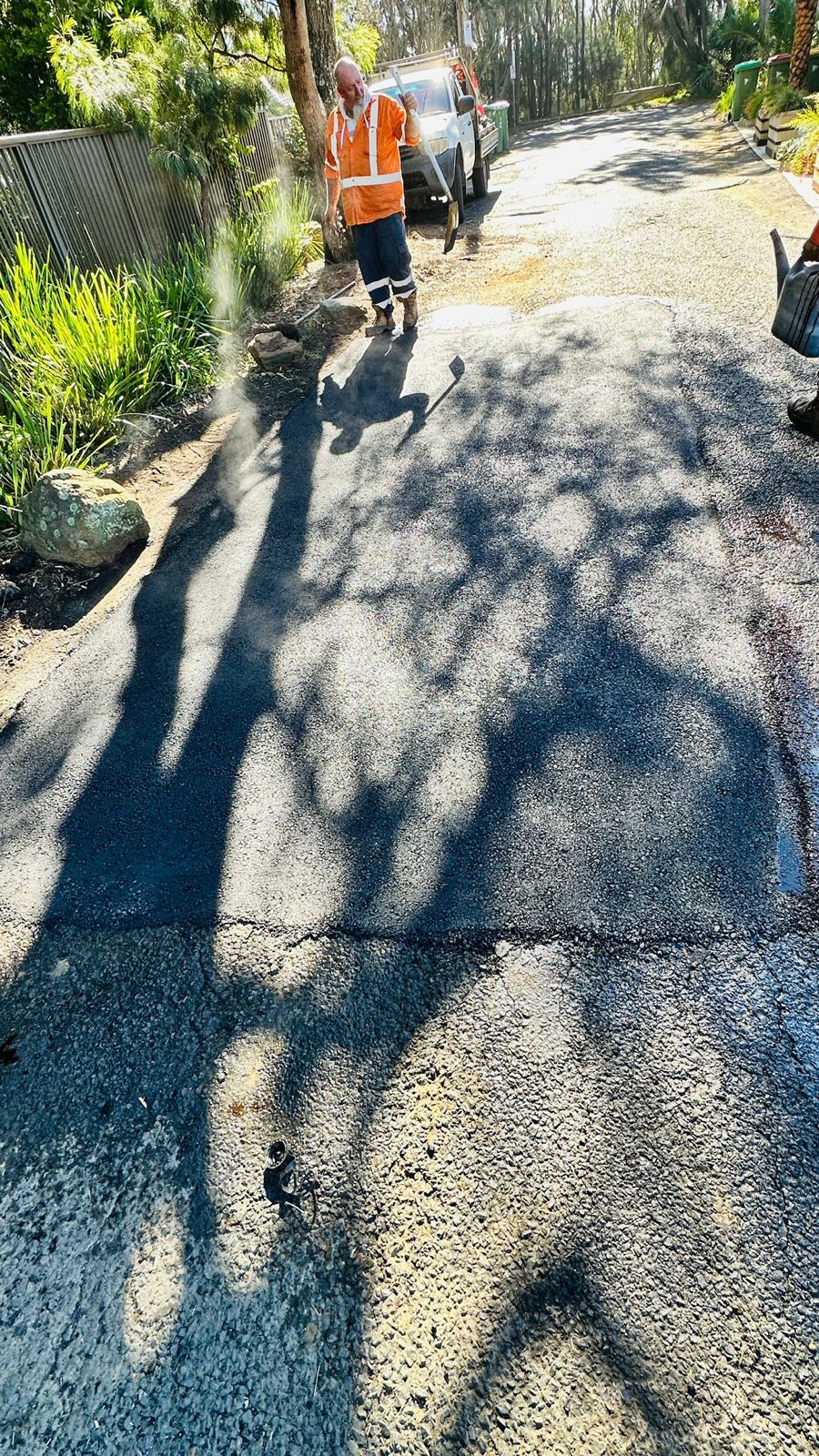
A standard residential asphalt driveway on the Coast is 25mm to 30mm of hot mix laid over a prepared base, two-coat tack where needed, hand-edged around your brickwork, and rolled with a 1.5 to 3 tonne roller. That’s the spec. Anything thinner or skipped is where dodgy quotes shave the price.
Your quote is paying for four things:
- Hot mix asphalt supply (the material itself, batched at 160°C and trucked to site)
- Tack coat and base preparation
- Labour and machine time (paver or hand-spread, roller, crew)
- Site setup, removal of old surface, and disposal
If one quote is dramatically below the others, one of those four has been cut. Usually it’s the depth of mix or the prep. We’ll come back to that.
What Drives the Price (And Why Two Driveways Are Never the Same)
Five things move the number more than anything else:
Size. Smaller jobs cost more per square metre because the truck, crew, and roller still have to turn up. A 40m² driveway in Woy Woy will always be dearer per metre than a 200m² job at the same address. Fixed mobilisation costs spread thinner over a bigger area.
Base condition. If the existing surface is sound, we overlay and reseal. If it’s rooted, we excavate 100mm to 150mm, lay road base, and compact. That’s a serious extra line item.
Slope. Anything over a 1:6 grade slows the crew, and we need a stiffer mix that won’t slump. Steep driveways in Terrigal or Avoca cost noticeably more.
Access. Can the 8-tonne truck back in? If we’re barrowing mix 40 metres around the side of the house, that’s an extra half-day of labour, sometimes more.
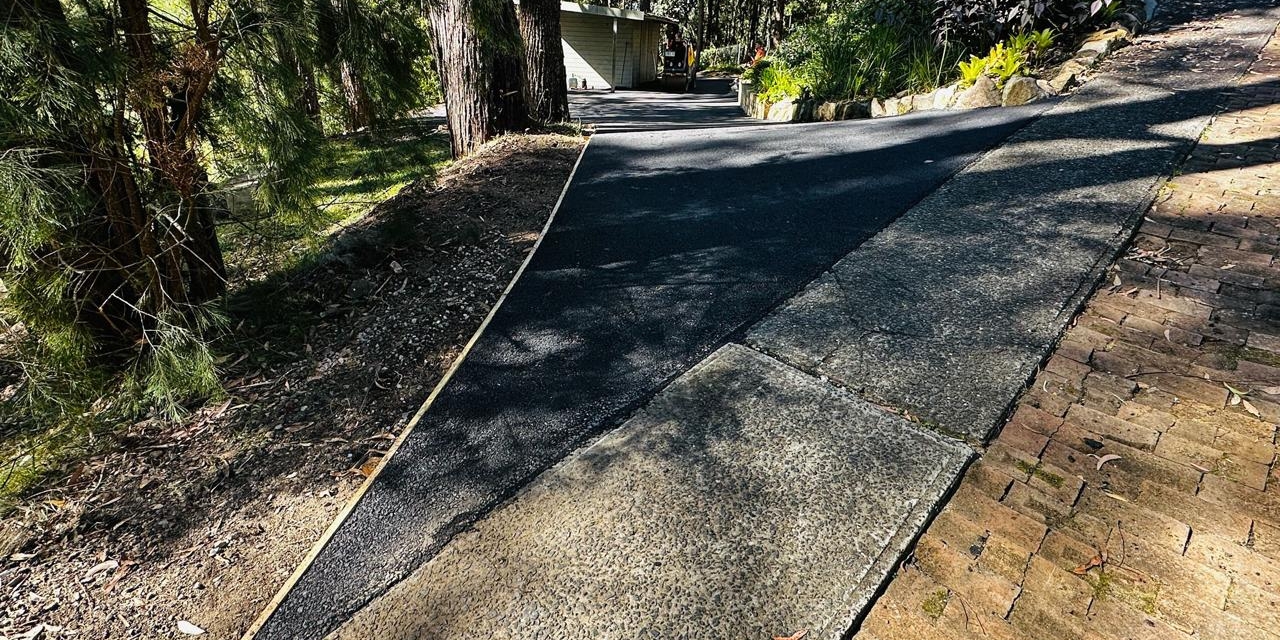
Edges. Free edges are cheap. Cutting into existing concrete, brick paving, or kerb adds time. So does forming a clean edge against the garage threshold so water doesn’t track inside.
Driveway vs Carpark Pricing: Why Commercial Is Cheaper Per m²
A 600m² carpark in Somersby comes in well below residential rates per square metre. Why?
Carparks have straight runs, simpler edges, and the truck can tip straight onto the slab. We can run the paver in long passes instead of hand-laying around garden beds. The mix is the same, the labour is just more efficient per square metre.
If you’re an owner-builder doing a big shed pad, ask for a carpark-style quote rather than a "driveway" quote. Same product, different rate.
Pricing up your own driveway? Skip the back-and-forth — Someone from the crew will come out, measure it properly, and put a fixed price in writing. No charge, no sales pitch.
Five Hidden Costs Most Quotes Miss
These are the line items that turn a budget job into a much bigger one after the fact:
- Tip fees. If we’re removing old concrete or busted asphalt, the tip charges by the tonne. Worth budgeting for, especially on full strip-outs.
- Drainage adjustments. Lifting an old grate or stormwater pit so it sits flush with the new surface adds a line item per pit.
- Saw cutting. Cutting a clean edge into existing concrete or kerb is charged by the linear metre.
- Geotextile fabric. On clay subgrade, particularly out toward Wyong Creek and Yarramalong, a layer of geofabric stops the base from pumping up through the asphalt. Adds a small amount per square metre.
- Speed humps, drains, and white-lining. None of these come standard on a residential driveway, but if you want a hump at the top of the slope, that’s separate.
Get these spelled out in writing before you sign anything. A quote that says "all inclusive" but doesn’t mention tip fees usually means tip fees are coming as an extra.
Bitumen Seal vs Hot Mix: How the Choice Affects Cost
For long rural driveways, a two-coat bitumen seal can save you serious money:
| Surface | Relative cost | Lifespan | Best for |
|---|---|---|---|
| Two-coat bitumen seal | Lowest | 8 to 12 years | Long rural driveways, low traffic |
| Hot mix asphalt (25mm) | Mid | 20 to 25 years | Suburban driveways, steep blocks, heavy use |
| Concrete | Highest | 30 to 40 years | High-end finish, very heavy vehicles |
We’ve done 400-metre driveways out past Mangrove Mountain in two-coat seal that have held up 15 years. Same job in hot mix would have cost three times as much. Horses for courses.
If you want the full bitumen vs asphalt breakdown, have a read of bitumen vs asphalt for Central Coast homes.
Sample Quote Structure: 80m² Wyong Driveway, April 2026
This is a real quote we wrote up for a job off Pacific Highway, Wyong. House had a tired old concrete driveway, cracked and pushing up at the joints. The line items tell you more than the total ever will:
- Saw cut and remove existing concrete (8m³)
- Tip fees
- Compacted road base 100mm
- Tack coat
- Hot mix asphalt 30mm, hand-edged
- Adjust two stormwater grates
- Site clean, traffic management
That job came in at the top end because of the strip-out. If the owner had only needed an overlay, the same driveway would have landed much lower. The breakdown is what matters — it tells you nothing’s been hidden.
You can see more residential examples on our Central Coast asphalt driveway page or check details for Gosford bitumen driveways.
How to Read a Paving Quote (And What Should Be On It)
Every quote we send out has the same line items, and yours should too. Here’s what to look for:
- Depth of compacted mix. "Asphalt driveway" isn’t enough. It should say 25mm or 30mm compacted.
- Type of mix. AC10 is the standard dense-graded mix for residential. AC14 for heavier traffic. These are the recognised Australian asphalt specs.
- Base preparation. Either "overlay existing" or "excavate, supply and compact X mm of road base".
- Edging detail. How the asphalt meets your garage, concrete path, or kerb.
- Inclusions and exclusions. Tip fees, drainage works, white-lining, saw cutting, all spelled out.
- Insurance and ABN. Public liability cover should meet the industry-standard amount for asphalt contractors. Ours is BWB CIVIL PTY LTD, ABN 80 627 620 973.
- Warranty period. Reputable contractors warrant workmanship for 12 to 24 months.
- Quote validity. Bitumen prices move with oil. Most quotes are valid 30 days.
If three of these are missing, ring the contractor and ask. If they get cagey, find another quote.
When the Lowest Quote Is the Wrong Quote
I get it. You’ve got three quotes. Two are within a few hundred dollars of each other. One is way under. Tempting to go with the cheap one, right?
Here’s what usually happens with the cheap job:
- Mix laid 15mm to 20mm instead of 25mm to 30mm. Looks fine on day one. Cracks within 18 months.
- No road base. Asphalt straight onto soft clay. Develops ruts within a year, especially under the wheel tracks.
- Hand spread, not rolled properly. Surface looks rough, won’t shed water cleanly.
- No warranty in writing. When it fails in two years, the number doesn’t answer.
We’ve fixed plenty of these. Pulling up a botched driveway and starting again costs more than doing it right the first time. If a quote is 30% under the others, ask the contractor what they’ve cut to get there. A straight answer is fine. A vague answer is your cue to walk.
When you’re ready for an honest quote, send through your details here and Someone from the crew will come out for a free site visit. We cover the whole Central Coast, from Woy Woy up to Lake Macquarie.
FAQs
What affects the cost of an asphalt driveway on the Central Coast?
Five factors do most of the work: size of the job (smaller costs more per square metre), condition of the existing base (overlay or full excavation), slope, access for the asphalt truck, and the amount of edge work needed against existing concrete, brick, or kerb. Tip fees, drainage adjustments, geotextile fabric on clay subgrade, and saw cutting are the hidden extras that most cheap quotes leave out.
Why is asphalt usually a better-value option than concrete?
Three reasons. The material itself is more affordable by weight. The install is faster, usually a day instead of three. And you don’t need to wait a week for it to cure, you can drive on it the next day. Concrete still wins for very heavy vehicles and ultra-long lifespan, but for most Central Coast homes, asphalt comes out ahead on value.
How long is an asphalt driveway quote valid?
Most contractors hold prices for 30 days. Bitumen and oil prices shift with global markets, so a quote from January might not stand in March. If you’re getting quotes and want to wait, ask the contractor in writing how long the number is good for.
Got questions about your Central Coast driveway or carpark? Someone from the crew will pick up, 0447 039 682. Or send through the quick quote form and we’ll come out for a free site visit.