
In short, yes, asphalt is one of the most recycled materials in Australia — over 70% of removed asphalt is reclaimed and reused (RAP, Reclaimed Asphalt Pavement). It can be milled, crushed, reheated, and laid again, repeatedly. Australia generates roughly 2.5 million tonnes of RAP per year and reuses most of it. Here’s the longer story on how it works, why it matters, and what BWB does on the Central Coast.
Quick facts: asphalt recycling in Australia (2026)
| Metric | Value |
|---|---|
| RAP recycled annually in Australia | ~2.5 million tonnes |
| Recycling rate | 70%+ of removed asphalt |
| Carbon reduction vs virgin asphalt | 20–40% per tonne |
| Common RAP content in new mix | 10–30% (residential), up to 50% (base course) |
| Asphalt vs concrete recycling rate | Asphalt higher — concrete down-cycled, asphalt re-used |
| First Australian RAP guideline | Austroads AGPT/T230 (2014, updated 2022) |
Asphalt is sometimes called "the most recycled product in Australia by tonnage" — more than aluminium cans, more than paper. Most homeowners don’t realise that the driveway material they’re paying for is partially recycled, and it’s better that way.
How is asphalt recycled?
The basic process:
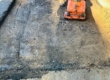
- Milling — an old asphalt surface is ground up using a milling machine, producing chunks 10–25mm in size called Reclaimed Asphalt Pavement (RAP).
- Transport to plant — the RAP gets trucked back to the asphalt plant.
- Sorting and stockpiling — RAP is sorted by size and quality, stockpiled separately.
- Re-introduction — at the plant, RAP is dried, heated, and added to fresh virgin aggregate and bitumen at a controlled percentage (typically 10–30%).
- Laid as new — the resulting mix is laid the same way as 100% virgin asphalt. You can’t tell the difference visually.
How is asphalt different from concrete recycling?
Concrete gets "downcycled" — crushed up and used as road base, not back into structural concrete. Asphalt actually gets recycled back into asphalt. The bitumen binder is reactivated by heat at the plant and acts like new bitumen again. Same material, fresh life.
Can 100% recycled asphalt be used?
Technically yes for some lower-grade applications, but it’s rare. Most road agencies cap RAP content at 10–30% for surface courses because too high a percentage affects performance. Base courses can run up to 50% RAP. R&D into 100% RAP mixes is active in Australia and Europe.
Why recycle asphalt? The numbers
Environmental:
- Reduces virgin bitumen extraction (a petroleum byproduct)
- Cuts greenhouse gas emissions by 20–40% per tonne
- Diverts 2.5 million tonnes per year from landfill
- Reduces virgin aggregate quarrying
Economic:
- Recycled asphalt is cheaper per tonne for contractors
- Local jobs in milling, hauling, processing
- Reduces transport distances (RAP comes from local roads, not interstate quarries)
Performance:
- Properly designed RAP mixes perform equal to virgin asphalt
- RAP-blended mixes often resist cracking slightly better — aged binder is stiffer and less likely to shove under heat
How much CO₂ does asphalt recycling save?
Around 30 kg of CO₂ per tonne of asphalt at typical 25% RAP content. For an average Aussie council laying 20,000 tonnes a year, that’s 600 tonnes of CO₂ avoided annually — equivalent to taking ~130 cars off the road.
Is recycled asphalt as good as new asphalt?
For most residential and commercial applications, yes — performance is equivalent or better. The Austroads National Asphalt Specification permits RAP content up to defined limits, with the same quality tests applied to the final mix as any virgin product.
The main concerns:
- Variability — RAP composition varies between batches. Plants manage this with sampling and proportioning controls.
- Aged binder — bitumen in RAP is oxidised and stiffer. Plants compensate with softer virgin bitumen in the blend.
- Aggregate contamination — if RAP isn’t sorted well, you get debris in the mix. Quality plants screen carefully.
A well-run plant produces RAP-blended asphalt that meets every Austroads specification a virgin mix would meet. Most Central Coast residential asphalt already contains 10–25% RAP without anyone advertising it.
Can I ask for asphalt with recycled content?
Yes — and most contractors are happy to tell you. Standard residential mixes typically contain 10–30% RAP already. We can spec higher RAP content if you want, though we’d typically stick with what the plant recommends for your application.
Does recycled asphalt look different?
No. The colour, texture, and finish are identical to 100% virgin asphalt. Same deep black surface when fresh, same grey as it ages.
What happens to your old driveway when we strip it out?
When we mill or excavate an old asphalt driveway, the spoil doesn’t go to landfill. It goes to:
- Local asphalt plants for RAP processing and reuse in new mixes (most common)
- Council road base programs as crushed RAP for low-spec applications
- Privately stockpiled for use as compacted driveway base on rural properties
The tip fees we charge on a quote reflect transport cost, not landfill cost. We pay the plant to take it; sometimes (depending on quality) the plant pays us. Either way, your old driveway isn’t going to a hole in the ground.
BWB and recycled asphalt
We source mix from local Central Coast plants — Boral, Downer, and similar. All of them run RAP-blended product as standard. Specific RAP content varies by mix type and batch:
- AC10 wearing course (residential driveways): 10–20% RAP typical
- AC14 binder course (commercial): 15–30% RAP typical
- Base course mixes: 30–50% RAP common
When we strip an old driveway, the asphalt goes back to the supplier for processing. We’ve never sent a load of asphalt to landfill in 30 years.
Will my driveway be cheaper if it has recycled content?
Not directly. The cost saving from RAP is on the contractor side and gets absorbed into competitive pricing rather than offered as a separate discount. You get the lower cost indirectly — Aussie asphalt prices are already factoring in RAP economics.
Other asphalt sustainability practices
Warm-mix asphalt
Traditional hot-mix asphalt is produced at 150–180°C. Warm-mix asphalt uses additives to drop production temperature to 100–130°C. Energy savings of 20–35%. Increasingly common in Australia. Identical performance to hot-mix.
Foamed bitumen
A technique where bitumen is foamed with water vapour, increasing surface area and allowing it to bind aggregate at lower temperatures. Used in cold in-place recycling — fixing old asphalt without milling and transporting.
Cold in-place recycling (CIR)
Recycle an old pavement in place — mill the existing asphalt, blend with virgin bitumen emulsion and aggregate, lay it back as the new pavement. Zero transport emissions. Used on rural and council roads, less common residentially.
Plastic in asphalt
You’ll see headlines about "asphalt made from recycled plastic". It’s a real technique — small amounts of plastic waste (1–5%) are added to the binder. Australian trials show acceptable performance. Still emerging, not yet standard. Worth knowing about.
What you can do as a homeowner
- Ask where the asphalt comes from when you get a quote — local plants run higher RAP content than imported product.
- Don’t insist on "100% virgin" mix unless you have a specific technical reason. It’s worse environmentally and no better in performance.
- Maintain your driveway — every year you stretch the life is a year of avoided emissions.
- Consider sealcoating as the lowest-impact maintenance option. Adds 5+ years of life with minimal new material.
- When you do replace it, the strip-out is recycled by default. No special instructions needed.
For technical detail on Australian asphalt recycling, see Austroads AGPT/T230 and the Australian Asphalt Pavement Association sustainability program.
Is bitumen renewable?
Bitumen itself is a petroleum byproduct — not renewable in the conventional sense. However:
- The bitumen in RAP is already extracted and gets reused, so RAP-blended asphalt reduces new bitumen demand by the RAP percentage.
- Bio-bitumen (made from plant oils or waste cooking oil) is in development, Australian trials underway.
- Asphalt’s lifespan is long — bitumen extracted once stays useful for 50+ years across multiple recycling cycles.
So while bitumen isn’t renewable, asphalt as a system is among the most circular materials in construction.
FAQs
Is asphalt recyclable in Australia?
Yes. Australia recycles over 70% of all asphalt removed from roads and driveways. Roughly 2.5 million tonnes of Reclaimed Asphalt Pavement (RAP) is reprocessed back into new asphalt mix each year. The bitumen is reactivated by heat at the plant.
Does recycled asphalt last as long as new asphalt?
Yes. Properly designed RAP-blended asphalt meets all Australian performance specifications. Most residential driveways in Australia already contain 10–30% recycled content with no impact on lifespan.
Is asphalt better for the environment than concrete?
On a per-driveway basis, yes — asphalt manufacturing emits less CO₂ than concrete, lasts long enough that emissions amortise well, and at end of life gets recycled back into new asphalt. Concrete is heavier on cement emissions and only downcycles to road base.
Does BWB use recycled asphalt?
Yes — every mix we lay contains some recycled content as standard from local Central Coast plants. Strip-outs from old driveways go back to the plant for reprocessing.
Want a fair quote on a driveway that’s good for the environment AND lasts decades? Send through the quote form and Glenn or one of the crew will come out. Modern asphalt is the lowest-impact paving choice — and we’ll spell out exactly what goes into it.