
In short, you can drive on fresh asphalt within 24 hours, but full cure takes 6–12 months. Wet weather rules: don’t lay asphalt if rain is forecast within 6 hours of pouring, ambient temperature should be 10°C or higher, and you should keep traffic off it if it gets wet in the first 4 hours. Sealcoat needs 24 hours dry, ideally 72. Here’s the longer story.
Quick reference: asphalt curing times
| Stage | Time after laying | What you can do |
|---|---|---|
| Set | 2–4 hours | Walk on it carefully (not hot summer days) |
| Drivable | 24 hours | Light vehicles (cars, vans) |
| Trafficable | 48–72 hours | Sharper steering, trailers OK |
| Stable | 2–4 weeks | Heavy point loads (caravan jockey wheel) |
| Fully cured | 6–12 months | Sealcoat applied |
The "drivable" stage at 24 hours is what most homeowners care about. The asphalt is fine to drive on the next morning — but it’s still soft enough that sharp turns, locked-wheel steering, or heavy point loads can leave marks.
What does "curing" actually mean for asphalt?
Asphalt doesn’t cure like concrete. Concrete chemically hardens through hydration over weeks. Asphalt is a hot mix that cools and the bitumen binder stiffens as it loses temperature and slowly oxidises over months.
Three stages happen:
- Cooling (first 4–6 hours) — bitumen goes from 150°C at laydown down to ambient temperature.
- Stiffening (next 2–4 weeks) — the bitumen continues to firm up as residual heat dissipates.
- Oxidation (next 6–12 months) — surface bitumen oxidises slightly, hardening the wearing course further.
You can drive on it after stage 1, but it’s not fully strong until stage 3 is well underway. That’s why heavy point loads (a caravan jockey wheel, motorbike side stand) can leave dimples for the first 6 months even though normal car traffic is fine.
Can I park on new asphalt the same day?
Light-weight cars, after about 4 hours, on a cool day, fine. Hot summer days (30°C+), wait 24 hours. Heavy utes, vans with trailers, caravans — wait 48 hours minimum.
How long before I can sealcoat new asphalt?
6–12 months minimum. Sealcoat applied to fresh asphalt that hasn’t oxidised peels off in sheets. Wait until the next maintenance cycle.
Wet weather rules: when not to lay asphalt
Rule 1: No rain within 6 hours of laying
Hot mix needs to cool and partly stiffen before it can shed water. Heavy rain within 6 hours of laydown can pit the surface, wash out the surface aggregate, and leave a rough finish. Light drizzle for 30 minutes is usually OK if the surface temperature is still above 80°C.
Rule 2: Ambient temperature 10°C minimum
Asphalt cools faster than the crew can lay it if the ambient temperature drops below 10°C. The mix stiffens before the roller has finished compaction, you get a porous, low-density surface that fails within 2 years. On the Central Coast, this is mainly an issue in July mornings — we work the warmer afternoon window then.
Rule 3: Surface must be dry before laydown
Even a damp subgrade or base causes problems. Steam from trapped moisture creates bubbles in the asphalt, which become voids later. We sweep, sometimes dry with a torch, before laying. If the morning has been wet, we’ll usually wait a few hours.
Rule 4: No standing water during cure
For the first 24 hours, water sitting on fresh asphalt can stain the surface and (in extreme cases) wash binder out of the joints. We grade everything to drain, but if a freak downpour hits at hour 6, the driveway might have some surface marks. Aesthetic, not structural.
What happens if it rains right after asphalt is laid?
Within the first hour, light rain is usually OK — surface temperature is still 100°C+, water flashes off. Heavy rain in the first hour can pit the surface. Hours 1–6, light rain causes surface marks but no structural damage. Hours 6–24, fine — the surface is dry enough to shed water.
Can asphalt be laid in cold weather?
Yes, if you work the timing. Ambient 10°C is the floor. We schedule winter pours for late morning to mid-afternoon when the sun warms the surface. Anything that needs to be laid on a 5°C morning, we either reschedule or insist on a cold-mix patch product (different material, no temperature requirement).
What about steep driveways and curing?
Steep driveways take longer to set because the mix wants to flow downhill before it cools. We use:
- Stiffer mix (AC14 instead of AC10) on grades >1:6
- Cooler laydown temperature (135–140°C instead of 150°C)
- Faster rolling to lock in shape before flow can happen
You should still wait 24 hours before driving on a freshly poured steep driveway, and another 24 hours before doing any sharp uphill manoeuvring. Locked wheels on a 1:5 driveway can leave skid marks for the first few weeks until cure is complete.
Hot weather considerations
Aussie summers can work for or against asphalt curing depending on timing.
For: Hot afternoons aid initial cure and compaction. Ambient heat keeps the mix workable longer, giving the roller more time to compact properly.
Against: On extremely hot days (40°C+), the asphalt surface can stay soft for 36–48 hours instead of 24. We avoid afternoon pours in heatwaves, work early mornings.
For specifics on softening, AC10 mix softens noticeably above 50°C surface temp. Surface temp on a black asphalt driveway in the Hawkesbury can hit 65°C on a 40°C day. For the first 6 months of a new driveway in summer, don’t park trailers with jockey wheels on it during 35°C+ afternoons.
Will my new asphalt melt in summer?
Properly laid AC10 asphalt won’t melt — the softening is reversible and only affects the surface 5mm. Once the day cools, the surface restores. Continued ultra-heavy point loads (heavy vehicles parked daily) on a hot fresh driveway can leave permanent dimples.
Curing differences: hot-mix vs cold-mix vs warm-mix
| Type | Laydown temp | Drivable | Full cure | Best for |
|---|---|---|---|---|
| Hot-mix | 140–160°C | 24 hours | 6–12 months | Standard driveways, all weather >10°C |
| Warm-mix | 100–130°C | 24 hours | 6–12 months | Lower-emissions standard work |
| Cold-mix | 5–25°C (ambient) | 1–4 hours | 1–3 months | Patching, emergency repairs, cold weather |
Cold-mix is mainly for pothole patching. It cures by evaporation of the carrier and is workable in any weather, including light rain. Strength is lower than hot-mix at maturity, so it’s not used for full driveways.
For technical reference on Australian asphalt mix design and curing, the Australian Asphalt Pavement Association (AAPA) publishes the National Asphalt Specification.
What to do during the cure period
For the first 24 hours after we leave:
- Keep cars off completely if possible
- No foot traffic with thin heels (stilettos leave marks)
- No pets if you can avoid it (dog claws scratch)
- Don’t put anything heavy on the surface (no skip bins, no stockpiled timber)
For the first 30 days:
- Drive in slowly, no sharp turns at speed
- Don’t park a trailer with a jockey wheel on the surface (use a wide spreader plate or board)
- No oil drips — soft fresh asphalt absorbs oil faster than cured asphalt
- No solvent spills (paint thinner, petrol, brake cleaner)
For the first 6 months:
- No sealcoating
- No heavy commercial vehicles parking regularly
- Avoid hot-day point loads (40°C+ ambient)
After 6 months:
- Treat it like any normal driveway
- Plan first sealcoat at 6–12 months if you want maximum life
- Normal maintenance routine — see our yearly maintenance checklist.
What if water pools on my new driveway?
If pooling appears within the first few days, it’s usually settled water from the construction process. By day 3 it should be dry. If water is still pooling at day 5, there’s a drainage issue and we’ll come back to look at it. Pooling water on cured asphalt (months later) is the main reason for premature failure.
Will my new asphalt look perfect day 1?
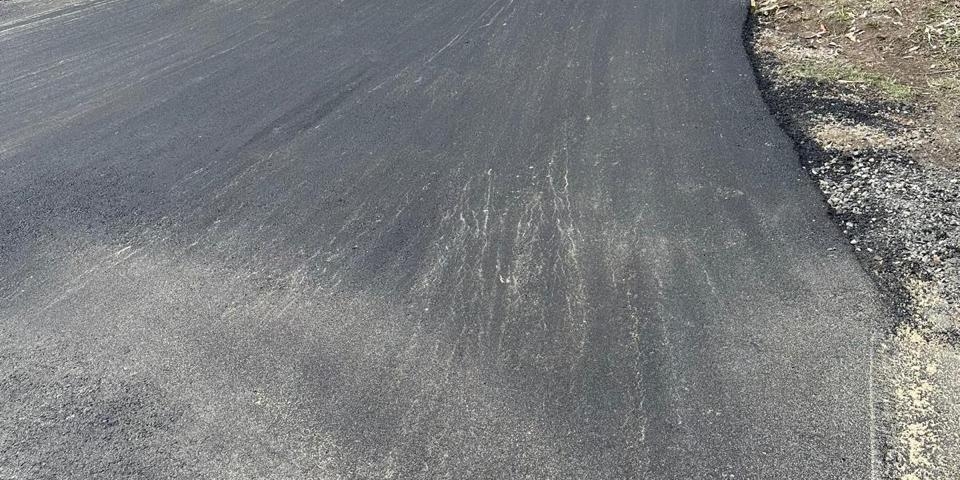
Day 1, it’ll look uniformly black and slightly tacky. Some roller marks may be visible on close inspection. Within 30 days, traffic settles the surface and it looks uniform. Hairline crazing on the surface in the first month is normal and disappears with traffic — it’s not a defect.
When laying asphalt in wet weather goes wrong
Stories from jobs we’ve fixed where someone else laid asphalt in the wrong conditions:
- 8°C morning pour in Wyong — uneven compaction, surface delaminated in patches within 18 months. $4,200 to strip and replace.
- Pour at 4pm with thunderstorm forecast for 6pm — heavy rain pitted the surface and washed out binder at the edges. Looked terrible from day 1.
- Damp base never dried before laydown — steam voids became cracks within a year. Whole driveway resurfaced.
If the contractor is pushing to pour in marginal weather, ask them to delay. Two days of delay is much cheaper than a botched job. For more on quote red flags, see our 9 red flags guide.
FAQs
How long does asphalt take to cure?
24 hours to be drivable, 2–4 weeks to be stable for heavier loads, 6–12 months for full oxidative cure. Most homeowners care about the 24-hour mark — your driveway is fine for normal car use the next day.
Can asphalt be laid in the rain?
No. Heavy rain within 6 hours of laying ruins the surface. Light drizzle right after laydown (within the first hour, when surface temp is 100°C+) is generally OK because water flashes off, but contractors shouldn’t deliberately pour in rain. Forecasted thunderstorms mean reschedule.
How long before I can drive on new asphalt?
24 hours for normal car traffic. 48–72 hours for trailers, caravans, and any vehicle that does sharp manoeuvres. Avoid heavy point loads (jockey wheels) for the first 6 months.
How long before I can sealcoat a new driveway?
6–12 months minimum. Fresh asphalt needs to oxidise before sealcoat will bond. Sealcoat applied too soon peels off.
Got a job that needs to be laid soon but the weather’s marginal? Send through the quote form and Glenn or one of the crew will work out a window that gives you a properly cured driveway. We won’t pour in the wrong conditions even if it means rescheduling.